The Science Behind Short-Form Attention Spans
Before diving into numbers, it's worth understanding why length matters so profoundly on a platform like YouTube Shorts. We live in what researchers and marketers alike call the "attention economy," where every app, notification, and piece of content is actively competing for a finite slice of your focus. The rise of TikTok, Instagram Reels, and YouTube Shorts hasn't just created new content formats — it has fundamentally rewired how audiences consume video. Studies suggest that the average human attention span has been shrinking steadily in the digital age, and nowhere is this more visible than in the short-form video ecosystem where a creator has mere seconds to prove their worth before a viewer swipes away forever.
What this means for creators is that the first impression is everything. The "scroll stopper" phenomenon — that magical moment when a viewer pauses mid-scroll because something on screen caught their eye — is the gateway to any meaningful engagement. Whether it's an unexpected visual, a bold statement, or a relatable scenario, that initial hook needs to land instantly. But here's where it gets interesting: stopping the scroll is only half the battle. Once you've captured someone's attention, you need to hold it long enough to deliver actual value. This is where the psychology of dopamine and instant gratification comes into play. Short-form content thrives because it promises a complete, satisfying experience in a condensed timeframe — a mini reward loop that keeps viewers coming back for more.
The challenge, then, isn't just about being short. It's about being efficiently short. Too brief, and you risk leaving your audience unsatisfied. Too long, and you bleed retention faster than you can imagine. This tension between brevity and value is precisely what led me to dig deeper into the data — and what I found about the optimal YouTube Shorts length genuinely changed how I approach my own content strategy.
The Data-Backed Sweet Spot: 35-45 Seconds
Let's address the elephant in the room first. There's a widespread myth in the creator community that shorter always means better when it comes to YouTube Shorts. The logic seems intuitive — if attention spans are shrinking, shouldn't a 10-second video outperform a 45-second one? In reality, this oversimplification ignores what viewers actually want from short-form content, and the data paints a far more nuanced picture.
Consider the 15-second format. While it can work brilliantly for a single punchline, a visual gag, or a quick flex, it's almost impossible to build any meaningful narrative, demonstrate a skill, or walk someone through even the simplest concept in that window. The result? Viewers often feel shortchanged. They watched, they got a fragment of something, and they moved on without any lasting impression or reason to follow the creator. For educational content, tutorials, commentary, or storytelling — which make up a massive portion of successful Shorts — 15 seconds is simply too constrained to deliver genuine value.
On the other end of the spectrum, pushing toward the full 60-second Shorts limit introduces its own problems. Audience drop-off tends to accelerate noticeably after the 45-second mark, particularly when content isn't edited with laser-sharp precision. YouTube's algorithm pays close attention to audience retention rates, and a video where half the viewers bail in the final 15 seconds will struggle to get pushed to broader audiences. Longer doesn't inherently mean more value, and in the Shorts format, the risk of overstaying your welcome is very real.
This is exactly where the 35-to-45 second sweet spot earns its reputation. This window gives creators enough time to establish a hook, introduce a problem or intrigue, deliver a satisfying resolution or piece of information, and even include a brief call to action — all without taxing the viewer's patience. Food creators, for instance, have found enormous success with quick recipe reveals that clock in around 40 seconds: enough to show the process, create visual excitement, and end with a mouth-watering result. Fitness coaches, life hack channels, and commentary creators have similarly reported stronger retention metrics when their content lands in this range. It's the Goldilocks zone of short-form video — not too short, not too long, but just right.
Crafting Engaging Shorts in the Optimal Window
Knowing your target length is one thing. Actually filling those 35 to 45 seconds with content that works is where most creators struggle. My experience has been that the creators who thrive in this format aren't necessarily the most talented videographers — they're the most disciplined storytellers. And that discipline starts long before the camera rolls.
The single most important rule I've learned is to commit to one idea per Short. The temptation to cram in multiple points, tips, or transitions is strong, especially when you're excited about a topic. Resist it. A focused Short that explores one concept thoroughly will always outperform a scattered one that tries to do too much. Once you've locked in your single idea, the structure practically writes itself: open with a hook in the first one to three seconds, introduce the problem or intrigue that makes viewers want to stick around, deliver your core value or entertainment, and close with a clear call to action if appropriate — whether that's "follow for more," "check out the full tutorial," or simply ending on a cliffhanger that drives curiosity.
The editing side of the equation is equally critical. Fast-paced cuts, dynamic visuals, and on-screen text aren't just aesthetic choices — they're functional tools that maintain momentum and compensate for the natural attention drift that occurs even within a 40-second video. Music selection matters enormously here too, since the right track creates emotional energy that carries a viewer through moments where the visuals alone might not sustain interest. I personally script my Shorts word-for-word before filming, which sounds excessive until you realize how much time it saves in editing. Scripting forces you to confront filler language — the "ums," the redundant phrases, the unnecessary context — and eliminate it before it ever makes it to the final cut.
Practically speaking, if you're consistently filming Shorts that run 55 or 60 seconds, the fix is almost always in the script rather than the editing room. Trim your setup, trust your audience to follow a faster pace, and ruthlessly cut anything that doesn't actively move the content forward. Those savings will bring you right into that 35-to-45 second window without sacrificing substance.
Beyond Length: Other Factors for YouTube Shorts Success
While the 35-to-45 second framework is a powerful foundation, it would be misleading to suggest that length alone determines success on YouTube Shorts. The algorithm and the audience both respond to a constellation of factors, and optimizing length without addressing the others is like tuning a race car's engine while ignoring the tires.
Visual and audio quality remain non-negotiable. You don't need a professional studio, but grainy footage or muffled audio will cause viewers to swipe away regardless of how well-structured your content is. Natural lighting, a decent smartphone camera, and clear audio go an enormous way. Trending sounds and music deserve special attention because YouTube's Shorts feed actively surfaces content that uses popular audio, meaning the right track can extend your organic reach significantly. Beyond the technical elements, your caption strategy and hashtag use help the algorithm categorize and distribute your content to the right audiences — a step many creators underestimate.
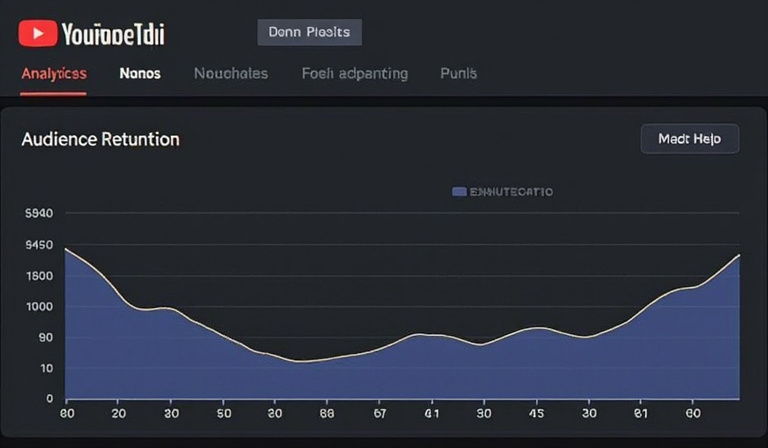
Consistency is another often-overlooked pillar of Shorts growth. Posting regularly signals to the algorithm that you're an active, reliable creator worth promoting, while also training your audience to expect and look forward to your content. And when comments come in, engaging with them — even briefly — creates community momentum that platforms love to reward. Finally, and perhaps most importantly, I'd encourage every creator to spend real time studying their analytics. The audience retention graph inside YouTube Studio is genuinely one of the most valuable tools available, showing you precisely where viewers are dropping off. If your retention cliff happens at 30 seconds, that's actionable data. If engagement spikes during a particular style of hook, that's a repeatable formula. The analytics don't lie, and learning to read them fluently will accelerate your growth faster than any single tactical adjustment.
Start Small, Think Smart, and Test Everything
After everything I've explored about YouTube Shorts optimization, the throughline is clear: the 35-to-45 second range isn't arbitrary — it's the product of real behavioral patterns, algorithmic tendencies, and the fundamental psychology of how humans consume short-form content. It's long enough to create genuine value and connection, and short enough to respect your audience's time and maintain the retention rates that the platform rewards with broader distribution. For creators who have been guessing at their ideal length or defaulting to either extreme, this data-backed sweet spot is a concrete, actionable starting point.
That said, I want to leave you with this: treat the 35-to-45 second framework as your informed starting point, not your permanent ceiling. Every niche, every audience, and every creator has unique variables at play. Some content genuinely works better at 25 seconds; some topics deserve a full minute. The difference between creators who guess and creators who grow is that the latter test with intention, analyze with curiosity, and iterate with purpose. So whether you're just launching your first Short or you've been grinding for months without the traction you deserve, let this be the moment you get strategic about your approach. What's your go-to Shorts length? Share your best tips or biggest struggles with YouTube Shorts in the comments below! And don't forget to like this article and subscribe for more content creation insights!